EMAIL US AT mail@snehindia.org
CALL US NOW (0674)2557343

Restorative Justice (RJ)

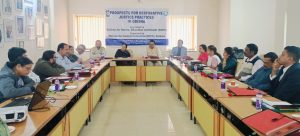
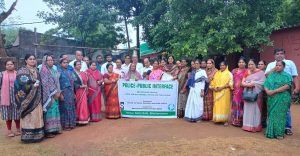
SNEH’s Restorative Justice (RJ) initiative in Salia Sahi has a strong impact on community-based conflict resolution and social cohesion. Over time, a clear shift has been observed, with residents increasingly approaching women peacemakers from Peace Committees instead of police stations to resolve disputes. Even police officials have begun to place trust in community members as agents of positive change in addressing minor crimes. The program focuses on delivering justice at the community level by empowering women in restorative justice and peace-building roles. Women Peace Committee Members have emerged as confident and respected leaders, actively mediating domestic conflicts, reducing reoffending, and strengthening inclusive leadership within the community. Their patience and consistent efforts have improved understanding among disputing parties, facilitated mutual dialogue and fostered greater community cooperation and ownership of justice outcomes. As part of the initiative, around 50 women from different habitations were selected to form RJ teams, which later elected a 6-member executive body through a transparent process. In addition, Self-Help Group members have begun engaging in trainings on Restorative Justice. The project is featured with activities like Awareness program on Restorative Justice (RJ), Basic trainings on RJ for Sahi Committee members & Peace Committee members, Legal Literacy programs, Networking with lawyers & civil society members, Street plays, observation of International Women’s Day, observation of RJ week, TOT on RJ, Training program on Domestic conflict & Gender issue, Workshop on Family Celebration, “Together We Thrive, United We Celebrate” etc. The RJ model has helped strengthen social bonds and promote empathy and accountability in the community. Project evaluation over the last four and a half years also revealed that domestic disputes remain the most frequent issue, guiding SNEH to focus more strongly on addressing this concern in 2025–26.

Family Counselling Center, a community-based RJ desk was inaugurated on 8th March, 2026 on the occasion of International Women’s Day, by BMC Mayor, Sulochana Das. The center facilitates counselling sessions free of cost for victims of domestic conflicts.

Why?

Domestic disputes

have been prevalent in the community for a long time. Such conflicts, when remain unresolved, create a hazardous situation in the community. There is an urgent need to address such issues in order to establish peace among the residents. It manifests in the form of physical violence, breakdown of families, substance abuse, parental neglect, dowry torture, and other latent conflicts.

Moreover, issues in the family when not resolved effectively affect peace and cause disturbance in the community.

In earlier times, when such household conflicts were taken up by Sahi Committees there was a lack of sensitivity and consideration shown towards the victim/weaker party. The conflicts were not addressed properly and justice was in favour of the rich and powerful. The victims often accepted it as their destiny. The needs were ignored, and the harms not dealt with resulted in more victimization and vulnerability, due to the skewed power structure. 

a.Participants

Anticipated total direct project participants
Participant categories Women (18+) Men (18+) Boys

(under 18)

Girls

(under 18)

Other Total by category
1.RJ Facilitators 50 0 0 0 0 40
2.Peace Committee Members 180 7 0 0 0 187
3.Sahi Committee Leaders 0 60 0 0 0 36
4.Self-Help Groups Leaders 100 0 0 0 0 100
5.Civil society members

(women rights activists, lawyers, prison& police officers, media persons, NGO workers, etc.)

32 48 0 0 0 80
6.Families in conflict 50 50 15 15 0 130


  • SDGs:
  • SDG 16: Peace, Justice, and Strong Institutions

This is the most direct and profound alignment.

Target 16.3: Promoting the rule of law at national and international levels and ensuring equal access to justice for all. An RJ desk provides a decentralized, accessible alternative to formal courts, which are often unapproachable for slum residents.

  • Target 16.1: Significantly reducing all forms of violence. By resolving domestic and community conflicts early, this desk prevents escalation into physical violence.
  • SDG 5: Gender Equality

Positioning local women as formal “peacemakers” fundamentally alters leadership dynamics within informal settlements.

Target 5.1 & 5.2: Ending all forms of discrimination.

Target 5.5: Ensuring women’s full and effective participation and equal opportunities for leadership at all levels of decision-making.

SDG 11: Sustainable Cities and Communities

Urban informal settlements often lack formal security infrastructures, leading to volatile community dynamics.

Target 11.7: A functional, trusted RJ ecosystem makes the neighborhood physically and socially safer, making the settlement more resilient and inclusive.

Indirect:

SDG 17: Partnerships for the Goals: This project bridges informal community desks with local police, Sahi Committees, SHGs, it strengthens the multi-stakeholder partnerships necessary to build sustainable, institutionalized safety nets.